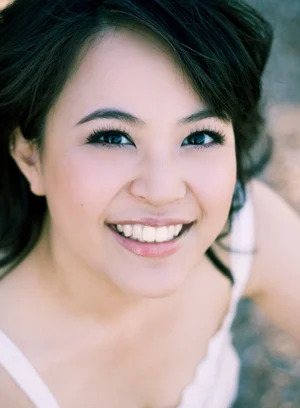
I Took Dictation Bootcamp | Dictating Your Novel for Authors w/ Sarah Elisabeth Sawyer | Ep 66
Sarah Elisabeth Sawyer dictated 1,500 words in 20 minutes — while doing the dishes. I went blind in 2017, and dictation is how I've finished seven novels since. Here's how to write faster without wrecking your body:
Read Full Transcript
00:00 Dictating…Cuz I Was Blind
Sophia Chang (00:00)
Welcome everyone to the Sophia Chang Show. I have such a special guest today. I am so excited. Sarah Elisabeth Sawyer is the author of 19 books and counting, most of them written through dictation. She teaches fiction authors how to build sustainable writing habits and live their best creative lifestyles through both her training programs and podcast, The Confident Fiction Author. She's been featured on Joanna Penn's The Creative Penn podcast, Jane Friedman's blog — that big one — Writer's Digest magazine, and more. You can learn more about her work at fictioncourses.com. Sarah, I am so honored to have you join us today.
Sarah: Thank you for having me, Sophia. That was just such a beautiful introduction. That's the only way I can describe it. I really appreciate it. I know it's just like I've heard this before, but your presentation was just beautiful. Thank you. Appreciate you having me on.
Sophia: Oh, thank you. Thank you. Yes. So I found you because I've been doing dictation for years already. You know, mine started from disability, back in, say, late 2016 is when my symptoms started for my chronic illness, MOG antibody disease, which is very similar to multiple sclerosis. And by 2017, I had gone blind for several months.
I thought my career was over as a writer. I couldn't — and this is back in the day before we had all the technology that we have now. So back then I was like, how am I going to even talk to my friends? And so that's where I discovered dictation. That kind of came out of necessity, so I started dictating text messages, emails, anything that I needed to dictate. And then my eyesight has not fully come back. It's come back mostly.
I'm left with some mobility problems, like with my hands — they get sore very quickly. I have trouble reading things. So I need to always use dictation now. And then when I found you, I was like, wait a minute, wait, there's a whole thing. And so I, you know, started listening to your podcast. I started watching — you have so many free videos, you know, so, so many generous free videos, and especially with Scrivener.
I found very few people using Scrivener. I cannot live without it. I need it to write, so it's great that you have that Scrivener video as well. And then I've taken your bootcamp, but I want to know from you directly: how did you actually get into dictating?
02:21 Dictating Was Epic! (Epic Failure…)
Sarah: I probably was even later coming to it than you. I didn't get started really till 2020, like actually dictating, and my story goes back further than that. I do want to give a shout out to these tools that we have that make dictation so accessible for us, for any author. And it's because of literally the accessibility options. Like, that wasn't a thing. Now that we have speech to text and voice to text on our phones and on our computers, that's how we're able to do dictation as fiction authors in a really affordable, accessible way. And so we really credit, you know, these tools that have been developed for authors, you know, for people who have disabilities. I just wanted to give a shout out to that, because that is the reason why we get to borrow from that technology and get to use it for good, hopefully, with our fiction writing.
I started back — it was 2013. I got my first smartphone. And I was like, the smartphones have been out for a while, but I got it in 2013. Before that, I had heard about authors dictating, and everybody was using Dragon Dictation. Like, that was our only option. That was before — you know, with flip phones and all, you didn't have speech to text on flip phones. Like, they could — you called, and you could do text messages. That was it. You could play a little snake game. So it was like, that was about all you could do on the old, the old phones.
So before smartphones and all, authors — really the only way they could do it affordably was Dragon Dictation, unless you wanted to send it off to a human transcriber, which would cost you a thousand plus per manuscript just to have your words transcribed. I had looked at Dragon, it was on the shelf at Office Depot, right? Like the actual software, whenever we used to buy software and go load it onto our computers. So I had seen it, it was like over $700, and I was like, that's a pretty hefty investment, but man, if I could speak my words, how amazing would that be?
I did different research into it, and I knew authors who were using it, and they were like, here's how you train your Dragon and all of these things. It sounded complicated and expensive. And I was like, I don't think I'm ready to take the plunge. In 2013, when I got my smartphone, one of the first apps I downloaded was Dragon Anywhere. And that's their online app — I mean, their smartphone app. And it costs like $15 a month, still around today. So I got it and just did the trial version, tested it out, got a few sentences written, and I posted on social media. I was like, this could be epic. And it was — it was an epic failure. I was just like, this is not me. I can't write this way. My brain doesn't work this way. I'm freezing up. It's just, I'm having these issues with the technology, and it's still kind of pricey, you know, for just getting started, indie author — you know, even $15 a month. I was like, that's just not — really, I don't think this is going to work. I don't think dictation is going to work for me. So I put it to the side.
05:12 7 Years of False Starts
Sarah: And then I just kept coming back to it, though, because I would hear a podcast, right? I would hear a podcast, and this author, you know, dictating two chapters a day, or one author, she was dictating while loading groceries in her car, and like getting all these tens of thousands of words done while being healthier doing it. Like, not having to be chained to the desk and causing health issues — because writing can cause a lot of health issues. So I was like, oh, I'd really like to get back into it. So I kept coming back to it — try, fail. I had so many false starts. Over seven years of false starts.
So finally in 2020, I sat myself down and I was like, this is a skill that I need to learn, and I need to commit to learning it in order to actually make it where I can write my words of fiction by dictation. So I started practicing, I started training myself. I didn't have, you know, like, anybody guiding me or helping me or directing me or giving me exercises. Like, I just started developing ways that I could train myself to dictate my fiction. Because it is different from dictating text messages. It's different from dictating emails.
06:15 Fiction vs. Nonfiction Dictation
Sophia: I actually do want to — I want to learn about that, because I came from that realm. So yeah, the changeover is a little different. I still find myself dictating small sentences at a time as a result. So can you give a little — give us a little tidbit? What would be, like, a difference?
Sarah: Mm-hmm. Yes.
Yeah, so I think whenever we're dictating, like, a text message, one of the things is I think we're visualizing the person that we're texting to. And so we're kind of forming our sentences, and we're just talking like we would talk to them. Honestly, I think that's one thing that with nonfiction, it's easier to get out — if we're just doing story notes and we're just kind of vomiting it out, and we're just getting out, you know, my character, you know, I need to include this, this, and this. So it's just a very factual-based way that you're coming out of your brain.
Versus with fiction, you're accessing your imagination. You're creating story worlds. And there's a lot of issues around that, I think, with vulnerability. So we feel really vulnerable speaking those fiction words out loud. It feels awkward, because writing is such a solitary thing. And especially with fiction writing and those first drafts — they're so messy and all, and we're just, like, getting them out onto the page. And when they, you know, are just this mess and all, it just feels really vulnerable to speak that out loud. So getting past that is really important with dictation, and that's what I go into with my trainings — is really breaking it down into baby steps so it's not overwhelming.
07:53 Small Steps to Start Dictation
Sarah: And one of the things is: just do those short sentences. Just do a few sentences at a time while you're training yourself to eventually be able to dictate your entire first drafts. So I always tell authors, don't put that pressure on yourself to be like, okay, I'm gonna do dictation, I'm gonna dictate this whole next first draft. And then your brain just freezes up and goes, whoa, whoa, whoa, this is too much energy, this is too much pressure, this is stressful, let's just shut it down. We've got to conserve this energy for the fight or flight. And so our brains are actually wired to conserve energy. And so anything that is frustrating — and which we can't, you know, increase our frustration tolerance… and we do want to be in that discomfort, because that's where learning is. But if you're draining too much energy, you're really fighting against your brain instead of training it, so that it becomes as natural for you to speak your words of fiction as type them.
08:35 Doing Dishes Changed Everything
Sarah: And that's where I got to. I made the transition one day. It was 2020. I walked into the kitchen. I had dishes to do. I had to get out for an appointment. Had about 20 minutes there. And I was like, okay, I'm going to do these dishes and head out. Soon as I crossed over the threshold into the kitchen, this entire scene downloaded into my brain. It was a backstory scene, which was good, but it was on my current work in progress. It was a fiction scene, and I was like, no — like, if you've ever had that feeling, like — all fiction writers, I think, at some point experience that sinking in your gut. Because you're like, I've got this perfect scene. I've got the opening sentence, how it's going to end, the dialogue in there. Like, it is all there in a package, ready to go. And I was like, I've only got 20 minutes, and I've also got dishes in the sink.
So I was like, I can either run back to my computer and try to capture a few notes — which, that's all I knew I could do, because at my experience as a fiction author, I was like, this would take me an hour to write this scene, to type this scene. And I was like, ooh, should I just go capture some notes? And I'm like, it's still gonna be gone. You're still not going to have that scene that you could have had. And I was like, you know, I have another option. I've been practicing this dictation. What if I just go for it? What if I just try dictating it while I'm doing the dishes?
So I plugged in my earbuds — just like what you're wearing right now, Sophia, I plugged them in — which I don't really recommend, because, you know, the microphone rubbing on your clothes and all. But I'm a big advocate for just start with what you have. Like, don't let having the perfect setup and tools and tech all there get you started with dictation — just start with what you have. So I plugged them in, started my record app on my phone, dropped my phone in my pocket, started doing the dishes and speaking my scene. And this was an actual scene. It was the first time I spoke an actual scene versus just notes or morning pages. Like, I was doing actual fiction and writing an actual scene. And I finished the dishes, headed out the door, came back, had the app transcribe my words — and I had written nearly 1,500 words in, like, that 20 minutes. And yeah, I was just like, wow, I don't know what I need to do to really train myself to dictate, but whatever it is, I need to learn, because this is —
Sophia: That's a whole day of writing for me. That word count.
Sarah: So powerful.
That was a whole hour of writing for me at best. Like, if I was completely sitting down, focused, had my outline, was really getting in my flow, I could do 1,500 words. So that was powerful. That was my moment of transformation. I was like, I am dictating. And I went on to dictate that entire novel, and I've dictated every first draft since then. It was just — it was incredible.
11:19 Tips for New Dictators (uh, Authors)
Sarah: And I just encourage authors, though — there is that training process, and there is just kind of that moment where it just comes out. And I had an author that during one of our writing sprints, that's when she actually made the transition. She went from writing story notes to actually writing a scene. So when we all came back together and were chatting, she was like, I just did it. I wrote fiction for the first time. And so sometimes it involves community, and just that training and practice, that exercise, to make that full shift from typing to speaking your fiction.
Sophia: I'm still in that process. I've taken your bootcamp and I'm probably going to have to take it again. I'm probably going to take this next round again because, you know, I still find that at most I can dictate a paragraph, and then I'm like, I've got to think — I'm thinking of it, you know. So how do you get over that hurdle of: I'm thinking, I'm thinking — great, now the dictation went off.
Sarah: Perfectly fine. That's the thing. Just like I tell authors, take that pressure off yourself. Because it's like, when we activate the dictation function, we feel like we need to start talking and not stop talking, because it's going to deactivate on us. We don't want to do that. And I'm like, just stop. It's like the blinking cursor — it will be there when you come back to it.
And so I totally encourage authors that, yes, with dictation you can write faster. I doubled my writing speed. When I said 1,500 words an hour typing — I dictate an average of 3,000 words. And that's not talking as fast as I'm talking right now. It's an even slower pace. Like, I go slow when I'm dictating my fiction. It's the slowest that I speak, actually, and I still get double the word count. So totally fine to take your time.
And in fact, what I tell authors — this is a hack with your brain. Because, like I said, again, you're putting that pressure on your brain. You're draining extra energy that you don't need to. Because, you know, you've activated your dictation function, and in the back of your mind you're going, okay — in three seconds, five seconds, 10 seconds — different ones have different cutoffs when they'll deactivate, but that's in the back of your mind. It's kind of like watching a countdown timer, and you're like, three, two, one, and it's going to, like, blow up. And it's not. It's just going to deactivate, and you reactivate it.
So the hack that I teach authors is: be proactive and deactivate it yourself. So you get to the end of that paragraph and you're like, okay, that's all I've got. Let me stop it. And let me just sit here and think about my story, and just sit here with it, and get that next sentence, that next paragraph in my mind — and then reactivate it and speak that paragraph, and then stop it again. And so it may be slower than typing at first, when you're really getting going with dictating your fiction, but eventually it digs those neural pathways in your brain to where your words of fiction can flow out of your mouth as naturally as they do out of your fingertips.
That was my experience, and I've worked with hundreds of authors now, and I see that it happens in different ways for different authors. But I do see it happen for those who just stay diligent with it — not putting that pressure on theirself, but just staying diligent with it.
13:56 Sophia's Going Back to Bootcamp
Sarah: And I would love to have you back in the bootcamp, Sophia. We'll get you in, maybe in VIP, and we'll do some coaching.
Sophia: Do a little demonstration.
Sarah: I do that too. I have dictated live in front of my bootcamp students, and I am, like, breaking out and just soaking in sweat afterwards.
Sophia: Is that from the effort or from the rush?
Sarah: That's from the terror — the terror of writing fiction live in front of all of these people.
Sophia: You know, I kind of love that. I feel like that's the ultimate, because, you know, people get afraid to share their work. I feel like that's the ultimate sharing, because it's unfiltered. Okay, I can't wait to see you do that. I'll bring — we'll bring some towels.
Sarah: Yes.
I'm getting nervous already.
14:56 Dictation: Not Just a Luxury for Writers' Health
Sophia: Right. Thinking about it — I recently had a guest on where we talked about writing with disability. And I don't think that this is just a luxury. I feel like this is vital for a lot of us. Have you discovered any kind of physical benefits for doing it this way?
Sarah: 100%. So what drew me to dictation was writing faster. Like, that was it. I wanted to be able to get more words down and be able to write faster. Most authors coming to dictation — that was their goal. They wanted to write faster. What I've discovered, especially I would say in the last year, year and a half: authors are really coming to dictation, and their number one reason is health. So whereas it was, you know, I want to write faster, I want to write faster — authors are like, if I don't make this shift from typing to dictating, I won't be able to continue writing. I cannot continue to be a fiction author. This is it. This is the end of the road.
And then I have authors who are, you know, on the cusp of it, or they just want to be preventative. They're like, I see authors ahead of me, and they've been going for 10, 15, 20, 30 years, and their bodies are breaking down, and they're not going to be able to continue their career. So authors are really looking: how can I build a sustainable fiction writing career? And that, for me, has become my number one reason for dictation. Even if it wasn't faster, I would still dictate my stories, because it does get me away from the desk. Like, I don't dictate on my computer. I've got this great mic for podcasts like this — I've never used this for dictation. I just use my onboard mic on my phone, and most of the time I'm sitting in my big comfy chair in my living room doing my dictation. The fastest that I dictate, though, is actually lying down in bed.
So I think I kind of get a little bit of that tell-yourself-a-story-as-you're-drifting-off-to-sleep mode. But I will just have all of that pressure off of my neck, my shoulders. I've had back issues. I did a nonfiction book — and I'd already started dictating, but I did a nonfiction book in 2023, and I had like seven or eight research books spread across an extra table and my desk. And so I was, like, literally writing one paragraph at a time, and I wrecked my back. I did it in like six weeks of deadline and all this. And so I have to take care of my back. I have a treadmill desk that I get on regularly. And dictation — that's just, if I want to continue writing, if I want this to be a long-term, lifetime kind of thing, dictation is the way forward for me as a writer.
And I think that's the case for so many writers — whether you have a disability or you're looking for preventative. But so many are coming to it because they're like, I have carpal tunnel, I have surgery. And then some are just like, I just broke my arm — this was great timing. I did your bootcamp, and then the next week I broke my arm. Like, I'm so glad I learned dictation. I was like, great! I'm so sorry — like, that was awful. So yes, health is a big, big thing. And it's so many benefits for me.
Sophia: You're like, thanks? I'm sorry?
No, I think what you're saying about preventative — you know, here on the Sophia Chang Show, we always talk about: treat the whole body. The writer is the whole body, right? And a lot of times we forget that. The next thing you know, we have text neck and we're like, I can't see anymore, you know.
17:41 Low-Tech Ways to Begin
Sophia: But talk about low tech — you said you use your phone. That is actually your preferred choice. You're literally just there with — do you use, like, this mic, or?
Sarah: No, I do not. I just use the onboard mic. So I'll either hold my phone up close to my mouth like this — for those watching on video, I'll hold my phone up close to my mouth — or I will actually lay it on the arm of my chair, because the house is pretty quiet. And the newer phones, they're really made to zoom in on your voice. So whenever you activate, like, a recording, or you activate your dictation function — like, it is looking for your voice, and it will zoom in on it.
I've dictated in noisy places just to test it. I don't dictate out in public, just because I'm an introvert. I was just like, I could be home all day. I go for a week without seeing another human being. But, you know, some authors like to do a coffee shop or something. So I tested it out, and it picked up even with the espresso machine going and other people talking, because it was zooming in on my voice. So you do not need a microphone. You can get a headset mic — so a lot of authors will get a headset mic or a lapel mic. Earbuds, when you have the mic hanging down, like I said, it can rub on your clothes, and sometimes a lapel can as well. But I've had my authors — they get whatever works for them. And some have done, like, AirPods and experimented with that. You just need to experiment with your technology and see what kind of accuracy you get. That's really what you're looking for, and just testing out your different methods of doing it. But yes, I just do it on my phone.
And I started off talking a lot about Dragon — again, I've never used Dragon beyond that trial version on my phone. So I never put Dragon on my computer, didn't keep it on my phone. So I did the record-and-transcribe method when I started. So I had a recording app that would record my words and then transcribe them. Now I do what I call live transcribe, and I just go right into my Scrivener iOS app, tap into the scene that I'm working on, tap up the keyboard, and tap my mic to activate my dictation function, and I dictate directly into my Scrivener scene — which is so fun, because the words are just right where they need to be. And then I can come to my computer and do cleanup and editing later.
19:55 The Dictation Bootcamp Experience
Sophia: There you go. Now we have no excuse. We're holding in our hand the power right now. So yeah, you've got another bootcamp coming up. Tell us what happens in a bootcamp.
Sarah: Yeah, there it is.
I'm so excited. That's how I started teaching dictation, and I do have an evergreen course now that's available for any time. But the live dictation bootcamp — so fun, because it is a whole community of authors. It's not just — you're getting training from me. I do the daily training. It's a four-day live bootcamp. It's just thirty-seven dollars, too. But we do a pre-party, and then we get into the trainings, and I give you an assignment so you can actually implement what you're learning. And I think that's so critical for authors — well, for anybody learning a new skill. You get the information, but then you need to implement it. And that's what we do in the bootcamp.
For those who are on Facebook — which is not required, but if you are on Facebook — we have a private Dictation Bootcamp Facebook group. So you can go in there and talk to your fellow authors who are trying out this tool, and they're, you know, having struggles with this or successes with that, and challenges, and just really networking with each other and really supporting each other in that journey. And that also happens in the chat during the live sessions. So we have the live sessions each day. And then I also have a VIP option — that's where we do group coaching. You can check that out too.
But I just love that time of being able to take authors through their first steps of dictating fiction. So if you're an author and you're like, this sounds kind of scary, I doubt I can do this and all — this bootcamp was built for you. Like, I designed it for authors who are low techies. Like, I'm not a super techie. So low tech — we're not doing a bunch of — you don't have to be a programmer or learn how to use fancy software and technology. And then we move through training your brain to start speaking your words. So really just getting accustomed to that, and taking those first steps to dictating your fiction. So that's what the dictation bootcamp's all about. It kicks off October 14th, 2025, and I can't wait. It'll be like my eighth bootcamp.
Sophia: My goodness. Yeah, no, we'll definitely have links down below. And I've taken this, and the reason I took it was because we are very busy people. And so when I saw something that's — it's only four days? I can do that. You know, if it's something like on and on, it's like, no, no — you know, people tend to drop off. But when you've got really quick courses like that, it's great. The price was unbeatable. When I saw it, I decided immediately. It was not even a thought. I was like, I need to do this. I need her to tell me how to do this.
And what I liked is that there was writing every single day. And then I really loved it too because we could keep our cameras on while we were dictating, so there's a bunch of us just, like, silently soliloquizing like Hamlet in the corner. And so, you know, then you really —
Sarah: And sometimes you've got an author doing, like, this — like they're, you know, jabbing a sword, or, you know, getting into a fist fight. And you're just like, yep, they're writing fiction.
Sophia: They're acting out the scene.
Yeah, and so you really get over that hump of, like, no, this feels weird. It's like — it doesn't feel weird after that day.
Sarah: We take care of the vulnerable feelings — just get them right out of the way.
22:57 Where to Find Sarah
Sophia: Exactly. Well, I'm super excited. I'm hoping that this has also made all of you watching and listening excited as well. And, you know, I'm really hoping I can see you guys on the bootcamp. You'll be seeing me, so I hope I'll be seeing you. Tell us, where else can we find you?
Sarah: Fictioncourses.com forward slash dictation. You can go download — I've got a few free resources there. So, Sophia was talking about — I'm always trying to put out as many resources as I can. My podcast, The Confident Fiction Author — I talk about dictation on there, and then just general lifestyle. I do talk a lot about health. I talk about taking care of ourselves, taking care of getting rest and recovery and rejuvenation, and all the things that really make ourselves up as writers. Like, we're not just pounding out words. We have so many other parts to us. So my podcast you can find on any of the major platforms, but I do have the transcripts on my Substack. So that's fictioncourses.substack.com. You can go get the podcast there, leave comments if you'd like to do that.
Sophia: Yeah, we'll definitely have all of the links below. Thanks for joining us, and stay tuned — because you better subscribe. We're going to have another bonus episode with Sarah coming up next month. So stay tuned. Thank you. Bye. Thank you.
Sarah Elisabeth Sawyer (24:25)
Thank you, Sophia. Take care.
Prefer audio? Listen on Spotify, Apple Podcasts, or Amazon Music.
I edit and produce everything myself, no team. ☕ Buy me a boba to help me keep creating.
Sophia Chang is a Reese's Book Club LitUp fellow, disabled dancer, and extroverted writer. She hosts The Sophia Chang Show podcast where she shares No B.S. publishing stories and advice she wishes she'd known. Subscribe if you don't want to cry alone.