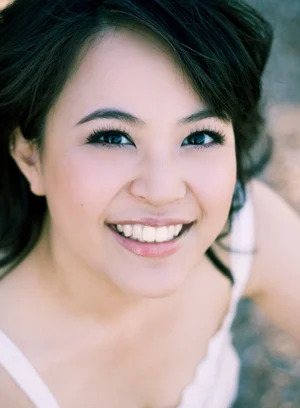
Writing Native Americans in Fiction Authentically w/ Sarah Elisabeth Sawyer | Ep 69
Choctaw author Sarah Elisabeth Sawyer is back to answer the age-old question: what is the correct terminology for Native Americanas? Plus, her take on sensitivity readers and whether you can—or should—write outside your culture:
Read Full Transcript
00:00 Introduction
Sophia Chang (00:00)
I come out here and I meet all these Angelenos who were like, "I was one of eight million Asians. Yeah, I was a cheerleader." I was like, the cheerleaders were the ones that made fun of me. And they're like, "Rahh!"
Back to the Sophia Chang Show. I have a treat for you today. Sarah Elisabeth Sawyer is back. Sarah is the author of 19 books and counting, most of them written through dictation — which our last podcast was about. She teaches through training programs, podcasts, and the Confident Fiction Author. She has been featured on Joanna Penn's The Creative Penn Podcast, Jane Friedman's blog, Writer's Digest magazine — just about everywhere. You can learn more about her at fictioncourses.com. Welcome back. I am so happy that you came back to the show.
00:47 Sarah Introduces Herself in Choctaw
Sarah Elisabeth Sawyer (00:47)
Sophia, thank you so much for having me. This is so fun. I love being with you. And if it's all right, I'll just introduce myself in Choctaw because I know it'll kind of line up with a theme that we're going with here. So — Halitoh, Sohochafoyet, Sarah Elisabeth Sawyer, Choctaw Siahoke. Hi, my name is Sarah Elisabeth Sawyer and I am Choctaw. I'm a tribal member of the Choctaw Nation of Oklahoma, although I do live in Texas.
01:14 The Terminology Debate: Native American vs. American Indian
Sophia Chang (01:14)
It's great that people have become more sensitive than they were when we were both growing up. However, it's gone to the point where I think people get nervous about asking about it. And we actually love when people ask us about it — because then we can talk authentically about our experiences.
So one of the first questions I asked you was: what is the actual term?
Sarah Elisabeth Sawyer (01:35)
That is such a big topic and I go really in depth in my course, breaking down the different terms and how and when to use them. Basically, "Native American" is a newer term — it came out probably around the '70s from academia, which is interesting. It didn't come from Native people themselves. It was more the colleges and universities saying, "This is what you need to be called."
I put this out there in my newsletter one time — I have a lot of Choctaw elders on my email list — and one of them emailed me back and said, you know, we have all of these different terms, and she said it feels like we don't know who we are anymore. It is a sensitive issue, and a lot of people have very strong opinions on different sides.
With a lot of younger Native people, you will hear "Native American" because that's what they were told coming through the colleges and universities, versus what they have in their communities — especially if they're disconnected from their communities. Most of the elders I know prefer "American Indian." That's what they grew up with. Even just "Indian," although there's a caveat — there's a lot to unpack with the term "Indian" because it has been used in a derogatory manner so many times.
When I use the term "Indian" or even "American Indian," people's eyes get so big and they're like, I can't believe you said "Indian." I've had people call me on that. And then I had somebody else on social media defend me — they're like, look, she literally is Choctaw. You can't be telling her what she prefers to be called. People just begging me: "Don't use the word Indian." When in fact, a lot of the Native community — that is what they want, especially the elders.
But "Indian" is more of an insider term. If you're out at a powwow and you're around a lot of Native people, they'll very freely use the term "Indian," call each other "Indian." But it's not something someone from outside would use per se.
So for front-facing things — like my free ebook on five stereotypes to avoid when writing about Native Americans — I'll use the term "Native American" just to get people in, and then educate them on the different terminology.
My preferred term, after all that — I do like "First American." I work a lot with the Chickasaw, we're kind of like brother tribes. "First American" is their stated preferred term, and there's now the First American Museum in Oklahoma City, so it's been gaining some traction. In Canada, they more go with "First Nations." So it does depend on regional differences.
Ultimately, the most correct way to refer to someone is by their tribal affiliation. I don't say I'm "Indian" or "American Indian" — I just say I'm Choctaw. So if you're writing Native characters, using their tribal affiliation is best.
04:16 In-Group Language and "What Are You?"
Sophia Chang (04:16)
I love that you brought up the in-group versus front-facing because there is a way of reclaiming language when you're in-group, and things hit a little different when outsiders try to say the same thing.
My parents are from Taiwan. There are whole layers of politics with that — layers of history, different dialects. So it's difficult. When I get the "what are you?" question, I can just say I'm Chinese, Chinese American. But then I have to say I'm Chinese from Taiwan, but I'm not actually ethnically Taiwanese — because if I said that I would really offend the native Taiwanese, who would be like, "That is so offensive. You guys are the nationalist suppressors." I'm sorry, I'm sorry — we were refugees too.
Sarah Elisabeth Sawyer (04:56)
So when someone asks what you are, you're just like: here's my memoir.
Sophia Chang (04:59)
Pre-order now on Amazon. [laughs]
Sarah Elisabeth Sawyer (05:01)
Simple answer.
You know, my nephew — he gets out in the sun and he gets dark, but he has hazel eyes like me. And people ask him, "What are you?" And he's like, "I'm human." So that's the best.
Sophia Chang (05:15)
I'm not so sure about that for me. I'm like, there's a little alien going on in here. Something's not right with this body.
Sarah Elisabeth Sawyer (05:20)
Well, that's where we get into the fantasy writers and the sci-fi writers.
Sophia Chang (05:21)
Exactly. Which I am! I think it's great to have these kinds of frank conversations and to give our opinions — we do have differing opinions.
05:30 Sensitivity Readers: Are They Actually Helpful?
Sophia Chang (05:30)
I actually do want to know about sensitivity readers. Give us your take.
Sarah Elisabeth Sawyer (05:34)
So, sensitivity readers — there's been a few articles on this, the pros and cons. For a while it was basically mandatory with agents and traditional publishing houses — you had to have a sensitivity reader. A lot of times they would give feedback like, "Here are some things you can change." I did have one historical fiction author where the sensitivity reader basically gave her a thumbs down, and her publisher would not publish her book. There was no rewriting it, no "fixing it."
There are a couple of things to break down on that. One is just having one person represent an entire culture and an entire history. That's just that one person's experience or opinion — where they grew up, how they grew up, their parents, their home life, their religious background, their education, all of these factors way beyond just their culture. And by nature, sensitivity readers are sensitive.
So we have to take that into account. I've tried to say that with a straight face. [laughs] But really — if you're basing your story on what the most hypersensitive person would be okay with, what are you leaving out that would really benefit all of your other readers? They may need to dive into some of those harder aspects — things the sensitivity reader may not be comfortable with but that are true to the history, true to the culture, true to the story you're writing.
I just really encourage authors: if you do use a sensitivity reader, that's not the only thing you do. Go to someone else within that culture, someone who is into the history. Half of my authors come into my courses because they base a lot of their fantasy cultures on American Indian cultures and they still don't want to perpetuate stereotypes. Whatever genre you're writing — I caution authors that even the things that get "approved," you still may need to get other feedback. You ultimately have to make those decisions as an author, and that's where doing your own research and your own deep dive is so important.
07:38 Beyond the Monolith
Sophia Chang (07:38)
You're speaking to the viewing of marginalized people as a monolith — as if one person can represent the whole. It's the same thing with the Chinese. We are 1.5 — probably closer to 1.6 — billion people on earth. I'm sorry to tell you: we are not the Borg, much as we would like to be.
I don't speak and then all 1.6 billion of my brethren are like, "Ah dui, wo ting dao le" — I wish. I can't even understand half the languages out there. They call them Chinese dialects, but they're not — they're full-on languages, different words, different everything.
Sarah Elisabeth Sawyer (08:05)
Follow her.
She knows all.
Sophia Chang (08:22)
There are certain regional accents so heavy that even though it's technically Mandarin, I just don't know what you're saying.
Sarah Elisabeth Sawyer (08:32)
Not the one I grew up speaking.
Choctaw is the same thing. All of those 500-plus nations have distinct languages. We have some overlap — Chickasaw and Choctaw, for instance. We say "Chipisalachiki" in Choctaw for "I'll see you again." Chickasaw is "Chipisalacho" — really similar. But there are differences. They use "Choqmaw" for their greeting, and we use "Choqmaw" for the word "good." Choctaw varies even town to town. I know Choctaws whose first language was Choctaw, and they say it depends on what part of Oklahoma you're in whether you can even talk to another first-speaking Choctaw. Yes, we're getting into some deep stuff. I love you sharing that.
09:13 Research and Character Depth
Sophia Chang (09:13)
Exactly. I love that you say: ask more than one. When you're doing your research, be thorough, be diverse — even within the group that you're researching.
Sarah Elisabeth Sawyer (09:26)
That is so important. Someone said within the Cherokee community: "Ask two Cherokees for their opinion and you'll get three opinions." So it's like any human group — we all differ so much. And really, you have to drill into your character. Who is your character? Did they have both parents in the home? Where were they raised? Were they raised in poverty or did they live on a ranch? What is their background? What things informed them as a character that go beyond just their culture — their spiritual beliefs, their religion, their socioeconomic situation — all of those things create them as a character.
That's where breaking away from stereotypes is so important. Not just having "the Asian character" that's one type. Who is that individual person? So that's where you really drill down as a fiction author. You take in all of this research and then you decide: how is this shaping my character, and what else is shaping my character? These aren't the only factors.
10:30 Regional Experiences and Growing Up
Sophia Chang (10:30)
Like you said, even within the state of Oklahoma you'll have differences. Same thing where I grew up — I did my high school in the suburbs very close to New York City, but it was still strangely provincial. I faced a lot of racism. I grew up super angry and bitter about that. And then I come out here to LA and I meet all these Angelenos who were like, "I was one of eight million Asians. Yeah, I was a cheerleader." I was like, the cheerleaders were the ones that made fun of me. And they're like, "Rahh!" I was like, man, I would have been a popular girl if I grew up here.
Sarah Elisabeth Sawyer (11:09)
And see, my mom growing up in Texas — especially in Fort Worth — her dad would tell her, "Be proud. Be proud that you're Indian." Because the Hispanics didn't want anything to do with her because she couldn't speak Spanish. She was like, "La Isabel, you know, just sit down, okay." And a Black man spit on her one time. And of course the white community was like, I don't know what to do with you — "Are you Mexican or something?" So they didn't know what to do with her. She was very much a loner.
Everyone has different experiences. So that informed who she is as a person, along with multiple other factors. But I love your story — you're like, why did I grow up here? I could have been a cheerleader.
11:51 Why Sarah Created the Course
Sophia Chang (11:51)
I was so jealous. I wanted to be the cool kid. What was the impetus for you to create this course?
Sarah Elisabeth Sawyer (12:00)
Woo — my mother. But really, I just had authors start asking me about it. My first book came out in 2013 — Touch My Tears: Tales from the Trail of Tears. I did that with nine other Choctaw authors. It was an anthology on removal — what we call the Trail of Tears, the Choctaw Trail of Tears. And I started getting invitations to speak at conferences about how to write about American Indians.
One of the biggest events was in Oklahoma, and they had hard questions for me, like: "I can't get someone from the Lakota Nation to call me back. I want to do it right, but no one wants to help me." That's when I saw there was such a need to be a bridge — here's how you can build those relationships, here's an understanding of why you're having these challenges, here's all the history.
Then in 2022, I lost a freelance client — she just ghosted me. And I went to my mom and was like, should I find another freelance client, or should I create that digital course you've been telling me to do? And she was like, "Do the course." So I said, "Yes, ma'am." I just get so much feedback about the emotional impact it's had on authors. So I'm so grateful that I had the opportunity to create it.
13:17 The Blanket Ceremony
Sophia Chang (13:17)
I love the stories you share about your mother. You told me a really special one about the blanket behind you.
Sarah Elisabeth Sawyer (13:27)
Yes! So that blanket is actually hiding some of my junk because we're getting ready to move. [laughs] But I was able to order it from a Native artist. In some cultures — not specifically Choctaw, but we have a lot of Pan-American things we do and share among different tribes — there's the tradition of wrapping someone in a blanket to honor them.
I adopted that from the Lakotas, because I've done a lot of stories on Lakota artists. They actually make star quilts — the community will hand-make a star quilt and wrap someone in it to honor them in a ceremony. So I really wanted to mirror that.
With my book The Choctaw Code Talkers of World War I — I called it Anumpa Warrior, which means "language or word warrior" — that was a two-year project. My mother was just such a rock for me throughout it. So when we had the release party in Oklahoma at our community center, I was able to surprise her with the blanket wrapping. I had two of my brothers there who were a part of that. So it's really, really special.
14:41 Choctaw Treaties at the National Archives
Sophia Chang (14:41)
Oh my goodness. And what do you have framed on the wall behind you?
Sarah Elisabeth Sawyer (14:46)
That is the American Constitution. We had the opportunity to go to DC in 2012 — we were there for two weeks. I was a part of the Smithsonian's National Museum of the American Indian Artists and Leadership Program. I was a baby back then, but that's what led to the publication of my first book.
While we were there, we went to the National Archives. One of the things we were able to do is go into the vaults where the first acts of Congress are kept — and that's where the Indian treaties are. We were able to see seven of the original Choctaw treaties. Not replicas — the actual treaties. And that was a tremendous, tremendous moment. Only three people at the Archives have access to that vault. We were able to get in through the connections with the National Museum of the American Indian.
So we purchased these pieces while we were at the National Archives. It's really a shared history. Choctaws fought alongside the Americans from the Revolutionary War all the way to modern day — that's the story I tell in my Code Talker book, and even further back than that. They'll be moving with me to my new office.
16:13 Episode Wrap
Sophia Chang (16:13)
I'm so moved hearing this. I could listen to you talk about this for hours. Well, good thing you have a podcast.
Sarah Elisabeth Sawyer (16:19)
You will get to hear me for hours. [laughs] I love sharing it. Thank you for that. Yeah, it's definitely a deep part of me. All of my books have Native main characters — all 19.
Sophia Chang (16:21)
I love it so much. Thank you so much for coming on to share such a special topic, so candidly, and also to tell us about your course. We'll definitely have links below that'll take you right to the course. Thank you guys for tuning in again for another episode of The Sophia Chang Show. Thank you, Sarah, for coming back on.
Sarah Elisabeth Sawyer (16:52)
Thank you for having me, Sophia. Yako-Ki — that's "thank you" in Choctaw. And we don't have a word for goodbye in Choctaw. We do say "to pisa la chiki" — I'll see you again soon. Take care.
17:05 BONUS: Should Authors Write Other Cultures?
Sophia Chang (17:05)
Thank you guys so much for tuning in. This was a really special talk for me. I love talking about race and culture, but I don't always get a chance to — so this was a super fun one.
For you guys who want to sign up for Sarah's course, I've got some bonus content where we dive into what the course is, who it's for, and exactly what you're going to learn. So stay tuned.
Sophia Chang (17:27)
You also mentioned — if people are writing characters from other cultures, you have a course for that.
Sarah Elisabeth Sawyer (17:34)
I do. It's Fiction Writing: American Indians. Sophia will have a link to it in her show notes. It's about a four-hour course — not a college course by any means. It's specifically for fiction authors to learn how to do their research and how to approach writing Native characters. Authors who come to me really have good hearts. They want to get it right, and they're so fearful — almost to the point of tears. Authors have perpetuated so many stereotypes for hundreds of years now. So we do have a very heavy responsibility as authors to get this right. We want to correct things from the past.
I created the course because I believe we actually should be writing other cultures. If we only write what we are, that's not even a real representation of our world. If someone who's white only writes white characters — or me, white mixed American Indian, just writing what I am and not including other races or cultures — we've gone to the other extreme where those characters are being left out of stories. There's a sense in which they're disappearing from fiction again. So I'm very much for Native authors writing our own stories — but there's also room for non-native authors to bring in those characters in an accurate, respectful way, so that we are included and not excluded. It would be wonderful to have that diverse cast of characters, which is really a true representation of the world we live in.
19:04 The Case For (and Against) Writing Other Cultures
Sophia Chang (19:04)
I'm torn on this myself. Because obviously, yeah, I'm tired of opening a book and it's just all white characters. I'm like, okay. But then I'm also more tired of opening a book and there's an Asian character and it's like — I wish you had just not, you know? So yeah, it's tough. So I'm glad you have a resource like that, so that when you are going to reflect the diversity of our reality, you can do it in a way that has at least a little bit more authenticity, that you've done some research into it.
Sarah Elisabeth Sawyer (19:41)
And I would rather authors leave out other cultures if they don't want to do the work to put them in authentically. If you're not wanting to do that work, then just write white characters, or Black characters, or whatever you are — just write those characters. But if you want to expand your fiction craft and really dive in and give your readers the best experience they can have, then be willing to do your research.
I think a writer should be judged based on their craft and not on their race. Even authors who are of that culture — I see them perpetuating stereotypes and other issues. So I just really encourage authors to put the work in and then let that work stand on its own.
20:26 What's In the Course
Sophia Chang (20:26)
I love it. Tell us a little more. What do you go over in your course? Is there a practical component?
Sarah Elisabeth Sawyer (20:33)
Absolutely. I have it broken into three parts. The first part is getting to know the people of your story — understanding their background. I talk about terminology, insider terms, a bit of the broad history of American Indians. There are still over 500 federally recognized nations in just the United States. So to have just a "Native American character" — especially in contemporary fiction — I see that a lot. They have a Native American character and I'm like, well, there's not really a "Native American character." What tribe are they? What region? The first part is getting to know some of the issues, misconceptions, and realities of Native people as a whole.
The second part is really: how do you do research? How do you watch for those pitfalls? I have — I think it's 12 stereotypes — skin color, the stoicism, romanticizing Indians, all of these different things I've seen not only in my lifetime but in previous generations, and still today. I talk about how to build relationships in Native communities so that you can go right to the source as a fiction author — connecting with cultural centers, museums, archivists. And I actually talk about how to approach someone from within that culture, because there will be challenges.
Then part three: publishing options. Can you even get traditionally published these days if you're writing about a different culture? I go through some publishing considerations, and ultimately how to become a trusted author who is including Native characters in their stories.
It's broken down into really bite-sized videos — most not over seven or ten minutes. You can consume it at your own pace, take it in a bit at a time, because it is a lot of ground to cover and it tackles a challenging topic. My goal is just to be a bridge, because I've been on both sides — I've been that author who's like, "What do you mean I can't write about another culture? I'm a writer, I write all of it." And then I've been on the other side as an American Indian and seen how much has been taken from our culture and misused. I've stood in both of those worlds, and I just want to be a bridge. That's why I created Fiction Writing: American Indians.
Prefer audio? Listen on Spotify, Apple Podcasts, or Amazon Music.
I edit and produce everything myself, no team. ☕ Buy me a boba to help me keep creating.
Your host, Sophia Chang, is a Reese's Book Club LitUp fellow, disabled dancer, and extroverted writer. She teaches Character First writing with Daniel David Wallace and believes deadlifts can change your life. She will make out with your dog. Subscribe if you don't want to cry alone.